
Saffron tea can be a fragrant way to pause at the end of the day. If you are considering it for sleep, keep the culinary experience separate from the clinical research: studies of a standardised extract do not establish that homemade tea treats insomnia.
Enjoy saffron tea for its colour, aroma and warmth. There is no validated therapeutic thread count for sleep, and more saffron does not guarantee a stronger benefit. Persistent sleep problems need appropriate assessment.
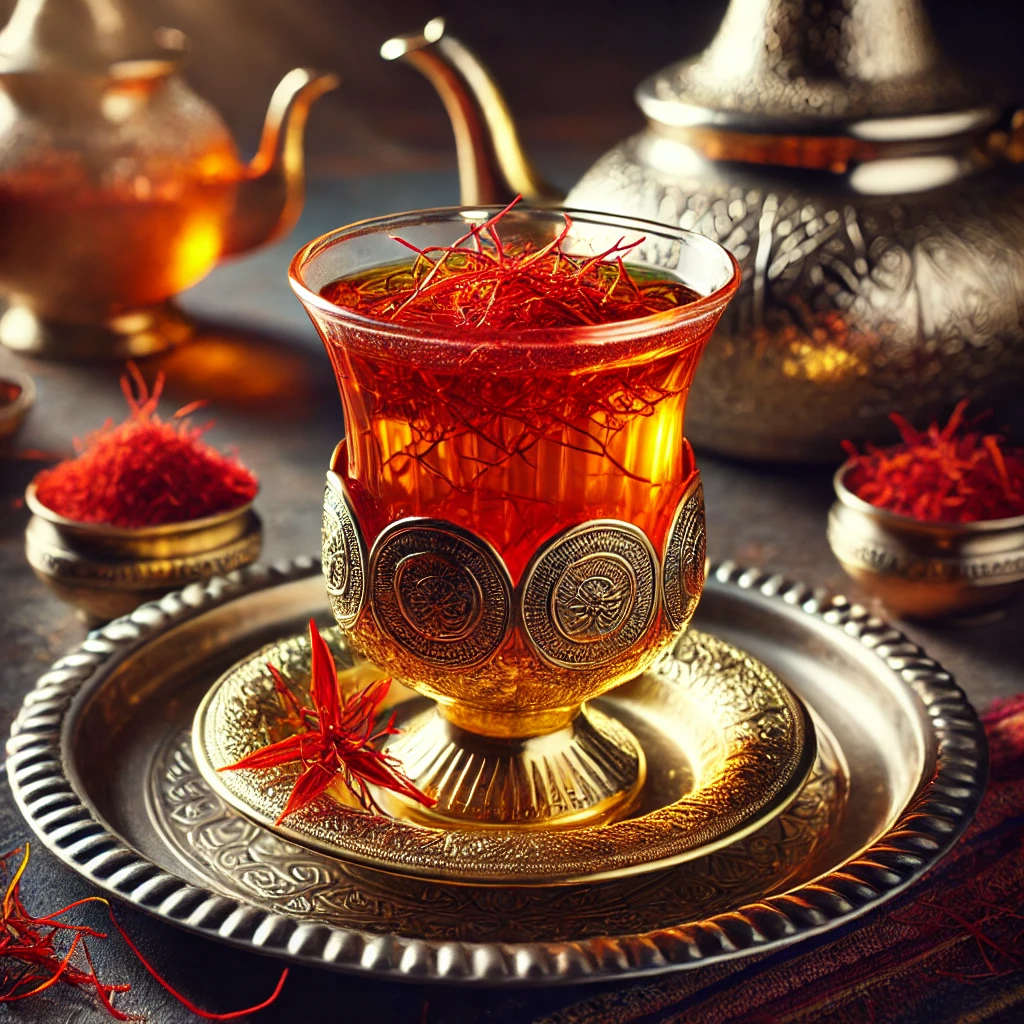
Saffron tea and sleep: what is actually known?
Relaxation, drowsiness and a measured improvement in sleep quality are different experiences. A drink may feel comforting without having an established pharmacological sleep effect. Saffron tea should not be described as a proven sedative or a guaranteed remedy for difficulty falling asleep.
A 2020 placebo-controlled trial studied a standardised saffron extract in adults reporting poor sleep. It found improvements in self-reported sleep quality over 28 days. This preliminary finding applies to the tested extract and study group, not to a cup of tea. Read the trial.
Claims about particular 2025 sleep studies need their own matching references. A paper about cardiovascular risk factors is not evidence that saffron tea improves sleep. When assessing a claim, check both the preparation used and the outcome actually measured.
How many saffron threads should you use?
Thread sizes vary, and counting threads does not measure a clinical dose. For flavour, use a small culinary pinch in a cup of about 200–250 ml, then adjust a future preparation to taste rather than seeking a medical effect. Our plain saffron tea recipe gives a lighter starting preparation.
The culinary ranges sometimes suggested for a stronger cup, such as 6–12 threads, are recipe choices, not a universal safe daily allowance or a sleep-treatment dose. There is no reason to progress to a much stronger drink in pursuit of better sleep.
Why extract doses cannot be converted to tea
Extract composition, concentration and the amount reaching the water vary. Milligrams of a studied extract are not interchangeable with milligrams of whole threads or with a number of strands. A dose expressed in milligrams must never be confused with grams.
How to prepare a balanced saffron tea
- Heat the water. Bring fresh water to a boil, then let it cool briefly so you are not continuously boiling the saffron.
- Infuse a small amount first. Put the threads in a cup with 1–2 tablespoons of warm water. Let them steep for about 8–12 minutes.
- Top up the cup. Add the remaining warm water to reach about 200–250 ml.
- Taste and serve. Allow the flavour to develop, then drink at a comfortable temperature. A little honey is optional; keep the saffron’s aroma in focus.
Pre-steeping is a culinary technique for distributing colour and flavour. It does not “activate” a guaranteed medical effect. Avoid prolonged boiling if you want a gentle, aromatic drink.
Making the drink part of a quiet evening
Choose a time that fits your routine and enjoy the drink without expecting it to make you sleepy. Plain saffron infusion contains no tea leaves; adding black or green tea changes the drink and introduces caffeine. For a recipe with milk, try warm saffron milk or kesar doodh.
If a late drink means waking to use the bathroom, a smaller serving earlier in the evening may suit you better. Flavour, comfort and personal preference are useful guides for a food ritual.
Who needs extra caution?
Pregnancy, breastfeeding, children, ongoing health conditions and use of medicines call for individual advice before regular or concentrated use. Do not combine saffron supplements with sleep or psychiatric medicines without speaking to a doctor or pharmacist, and do not stop prescribed treatment.
Read our pregnancy guide, dosage guide and side-effects guide. “Natural” is not a guarantee of suitability.
Frequently asked questions
Will saffron tea make me sleepy?
A reliable sleep-inducing effect has not been established for homemade tea. Some people enjoy its warmth and aroma as a relaxing ritual.
Can I make it stronger if it does not help?
Do not increase the amount to chase a sleep effect. Stronger flavour can also mean more bitterness, without proven sleep benefits.
When should I seek help for poor sleep?
If poor sleep persists, causes significant daytime difficulties or occurs with other concerning symptoms, consult a qualified healthcare professional. Tea should not delay assessment.
Recipes and related reading
Explore evening saffron tea, Moroccan saffron tea and the Saffron Academy.
Scientific source
Lopresti et al. (2020): Effects of saffron on sleep quality in healthy adults with self-reported poor sleep. This trial studied a standardised extract rather than a tea preparation.
General educational information, not individual treatment advice.