
How much saffron should you use? The first step is to identify the preparation and purpose. A small amount in a shared rice dish, a cup of tea and a concentrated capsule cannot be treated as equivalent doses.
There is no single saffron amount that this article can recommend as safe for everyone. Study doses describe particular preparations and selected participants. For cooking, follow a modest recipe amount; for supplements, seek product-specific advice.
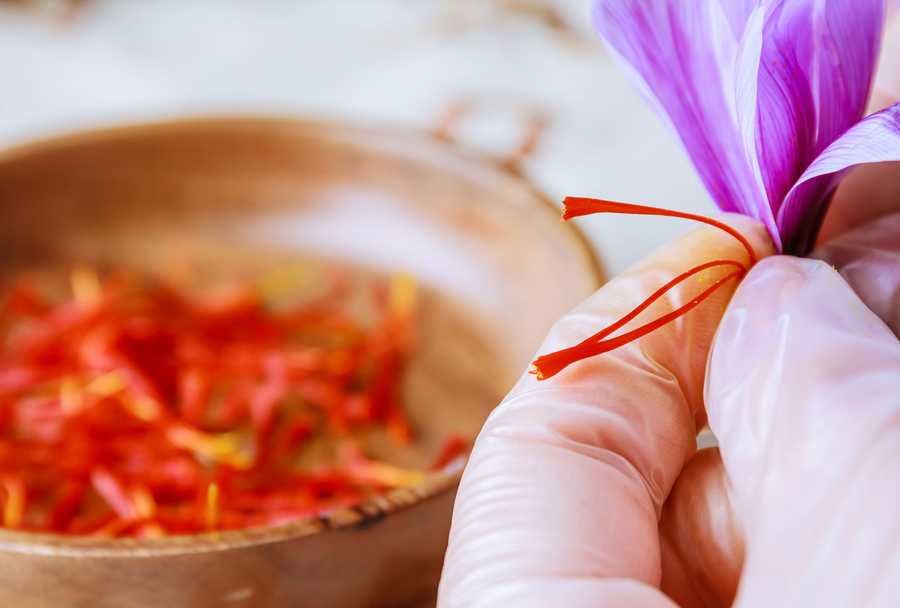
Whole threads: amounts for cooking
Saffron is intense, and many recipes use a small pinch across several servings. The aim is flavour, colour and aroma, rather than a medical effect. Follow the recipe and consider its number of portions instead of treating the total dish amount as a daily supplement dose.
Thread sizes vary, so counting them is approximate. For a recipe that specifies a weight, a suitable accurate scale is more consistent. More saffron can make a dish overpowering or bitter without establishing a greater health benefit.
Start with our basic saffron rice for a practical example of blooming saffron and distributing it through a dish.
Saffron tea and infused water
A tea recipe uses a small culinary quantity in water. Steeping releases colour and flavour, but the amount of each constituent reaching the cup depends on the threads, liquid, temperature and time. A homemade infusion is not a standardised supplement.
Follow a light preparation for enjoyment rather than repeatedly adding threads or making a concentrated brew in pursuit of a therapeutic effect. See our plain tea recipe and tea and sleep guide.
Extracts, powder and capsules
A capsule may contain saffron powder, an extract or several ingredients. “Saffron capsule” does not automatically mean the same product as one tested in a clinical trial. Check exactly what the stated weight describes.
Many human studies use characterised extracts, but the literature is not restricted to one form or one dose. There is no universal scientific prescription of 30 mg per day for every product and purpose.
For example, one short sleep trial tested two extract amounts, while another used a different preparation and schedule. Those are research methods, not instructions to choose your own dose or reproduce the preparation with threads. Our sleep research guide discusses the findings and limitations.
Read the units and label carefully
- mg means milligrams. One gram is 1,000 milligrams.
- Total extract weight is not necessarily constituent weight. A label may separately state a compound concentration.
- Whole saffron weight differs from extract weight. They cannot be assumed clinically equivalent.
- Thread counts are approximate. There is no validated conversion from an extract dose to a therapeutic number of threads.
Do not confuse a milligram figure with grams or take a large amount to match a claim. If a label is unclear, ask the manufacturer or a pharmacist before use.
How long can a supplement be used?
A study lasting weeks or months cannot establish safety over years. Nor does its duration prove that every user needs the same course. There is no universal evidence-based schedule of breaks that makes long-term use safe.
Review the purpose, preparation, response and duration with a healthcare professional. Do not continue or increase a product solely because an online article describes “regular use”.
When individual advice matters
Before concentrated or regular supplement use, speak with a doctor or pharmacist if you take medicines, have an ongoing health condition, are pregnant or breastfeeding, or are considering use for a child. Product authenticity and culinary tradition cannot establish individual suitability.
Do not use saffron to replace prescribed treatment. Read our pregnancy guide and side-effects and safety guide.
What if too much has been taken?
If you suspect an overdose, seek prompt medical or poison-control advice. Keep the product packaging and estimated amount available. Do not use historical toxic-dose figures as a threshold below which you can assume safety, and do not wait for severe symptoms before asking for help.
Frequently asked questions
How much saffron is safe per day?
No single number applies to every person and preparation. Culinary recipe amounts and concentrated supplements need separate decisions.
Can I take saffron every day?
Daily use is not required to enjoy saffron in food. Ongoing supplement use needs a suitable product, clear purpose and appropriate individual advice.
Is tea equivalent to a capsule?
No. A capsule’s ingredients and extract specification may differ substantially from a homemade infusion.
Does a tested dose prove safety in pregnancy?
No. A dose studied in other adults cannot establish safety for pregnancy. Ask your maternity clinician before concentrated or regular use.
Further reading
- How to use saffron: quality, preparation and storage.
- Morning or evening: choosing a culinary routine.
- 2026 systematic review of human saffron safety evidence.
Explore more in the Saffron Academy.
General educational information, not a personal dose recommendation.