
Saffron cultivation in North Bengal raises an interesting question: how can growers assess a valuable crop outside its familiar production areas? The University of North Bengal’s Centre of Floriculture and Agri-Business Management, or COFAM, provides an institutional setting for horticultural demonstrations and technology transfer.
Regional cultivation exploration · Controlled systems and grower training · Flowering is an early milestone · Commercial yield, quality and repeated cycles need evidence.
COFAM’s role in horticulture
The university describes COFAM as a centre established in 2006 and associated with its biotechnology department. Its stated work includes demonstrations, practical training, planting-material production and transferring horticultural knowledge to growers.
What the original saffron account described
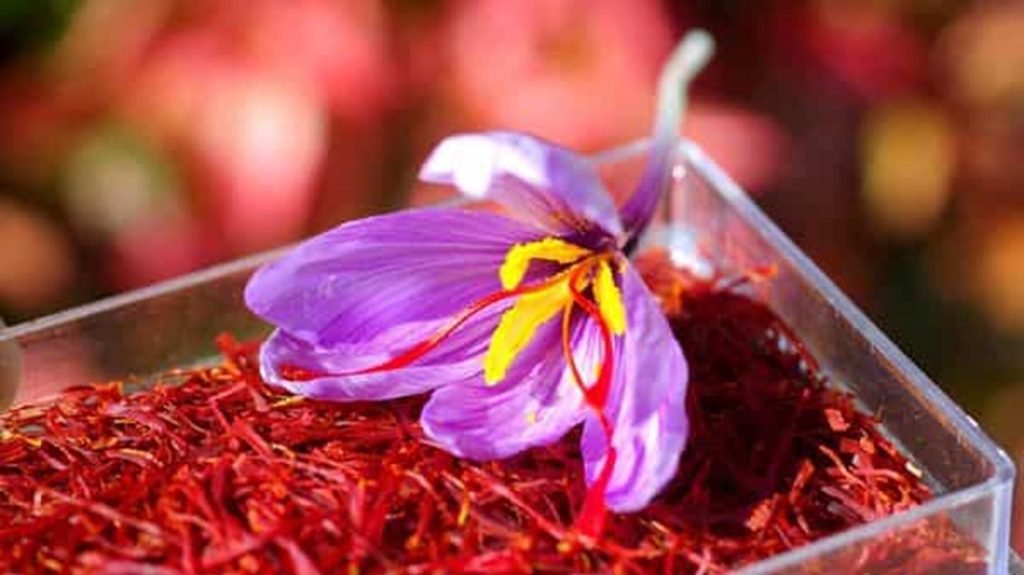
The original Saffrona article described a small trial using corms brought from Kashmir, flowering around Diwali and an interest in the name Darjeeling Saffron. It presented aeroponics as part of the cultivation approach.
The official centre page linked below confirms COFAM’s institutional role, but does not provide a complete saffron trial dataset. Precise corm counts, arrival dates, yield and product-quality comparisons should therefore not be treated here as independently verified results.
A claim of the first saffron cultivation in all northern India would also be too broad. The useful question is the particular local experiment and the conditions under which it succeeds.
What aeroponics means
Aeroponic cultivation supplies water and nutrients to roots through a mist rather than conventional soil. The term describes a growing method; it does not by itself establish that a saffron operation is more sustainable, profitable or consistent.
A complete saffron cycle also includes the condition of the starting corms and their renewal after flowering. Producing flowers once is different from maintaining a productive crop across repeated cycles.
Questions before scaling a regional trial
- Starting material: What corm size, origin and health status were used?
- Conditions: Which temperature, humidity, lighting and root-zone settings were recorded?
- Harvest: What were flower counts and dried stigma yield per unit of planting material?
- Quality: Which batch tests support colour, aroma and identity claims?
- Renewal: How well did daughter corms develop for the next cycle?
- Economics: What equipment, energy, labour and losses were included?
From a promising experiment to grower knowledge
Regional trials are valuable when their methods and results are clear enough to compare. Training can then help growers adapt the evidence to local conditions rather than copying a headline.
For Saffrona, this is a constructive meeting of agricultural tradition and careful experimentation. Respect for established origins can coexist with interest in new cultivation regions.
Frequently asked questions
Does flowering establish commercial success?
No. Repeated yield, quality, corm renewal and the full cost of production still need assessment.
Does this article certify Darjeeling Saffron?
No. It does not establish a protected designation, certification or current commercial availability for that name.
Primary institutional information
University of North Bengal: COFAM’s role, history and activities.
Explore cultivation in the Saffron Academy or discover Saffrona’s saffron from Herat.