
A laboratory study has explored saffron-derived compounds alongside immunotherapy in colorectal cancer models. It is a research finding in cells and mice, not evidence that saffron treats colorectal cancer in patients or improves a person’s response to immunotherapy.
The study generates questions for further research. It does not establish a clinical benefit, a safe patient dose or a recommendation to add saffron supplements to cancer treatment. Discuss any supplement with your oncology team.
What did the researchers investigate?
Feng and colleagues combined chemical analysis, target-prediction methods, cell experiments and a mouse colorectal cancer model. Crocin and safranal were among the compounds investigated. The work was published online in September 2024 and appeared in a 2025 issue of the Journal of Ethnopharmacology.
The report described inhibited cell proliferation, lower tumour mass in mice and changes in inflammatory and immune-related markers. Some effects were stronger when compounds were combined with experimental immunotherapy. These observations remain specific to the models and conditions tested. Read the original study abstract.
What do the methods mean?
Chemical analysis identifies substances in the material tested. Target prediction suggests biological connections for further investigation. Cell culture examines selected cells under controlled conditions, while an animal model tests a question in a living research organism.
These methods serve different purposes. A predicted target is not a confirmed treatment effect, and a response in cultured cells or mice is not a clinical outcome in a patient.
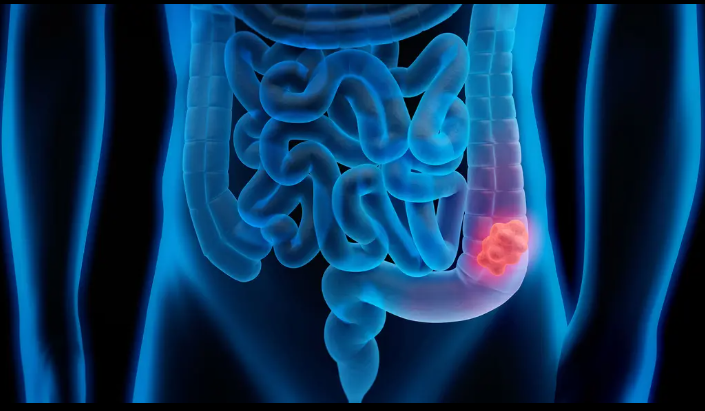
Why does the article discuss IL-17?
The study focuses on the IL-17 signalling pathway within its experimental cancer models. Signalling pathways are networks of biological interactions, rather than simple switches that can always be turned down with the same result.
Related cancer research shows why this context matters: IL-17 biology can have different roles according to the model and stage examined. A separate 2025 study reported tumour-suppressive functions in particular late-stage colorectal cancer settings. That work is not a saffron trial, but it cautions against describing IL-17 as universally harmful. Read the related mechanistic study.
What about PD-1-based immunotherapy?
The saffron paper investigated combinations within a preclinical setting. Such an experiment cannot establish which patients would benefit, how a supplement would interact with their medicines or whether a useful exposure could be achieved safely in humans.
A stronger response in a model is a reason for further investigation, not permission to copy the combination in a home setting. Whole saffron threads, tea and commercially available supplements are also different from isolated research compounds.
What is missing before a clinical recommendation?
- Appropriate human studies of the actual preparation.
- Clear evidence of clinically relevant benefits.
- Assessment of adverse effects and medicine interactions.
- Product specifications, exposure and dose evaluation.
- Evidence in the relevant cancer type and treatment setting.
The paper discussed here does not supply those patient-level answers. It cannot establish a survival benefit or justify replacing, delaying or modifying cancer care.
What should patients take from this?
If you are receiving cancer treatment, tell your oncology team about any herbs, extracts or supplements you use or plan to use. Do not add a concentrated saffron product in an attempt to enhance immunotherapy, and do not stop prescribed treatment because of a laboratory headline.
Questions about saffron in food during treatment can also be discussed with your care team, especially if you have individual dietary restrictions or unwanted symptoms. A culinary ingredient should not be presented as a cancer therapy.
Frequently asked questions
Does this show that saffron treats colorectal cancer?
No. The results concern preclinical models and do not establish treatment effectiveness in patients.
Can tea reproduce the laboratory combination?
No equivalent preparation or patient dose has been established. Tea cannot be assumed to reproduce an isolated compound or research extract.
Should I use saffron with immunotherapy?
Discuss all supplements with your oncology team. This study does not provide a recommendation to combine them with immunotherapy.
Scientific sources
- Feng et al.: Saffron improves the efficacy of immunotherapy for colorectal cancer through the IL-17 signaling pathway. Online 2024; journal issue 2025. Preclinical research.
- Denk et al. (2025): IL-17RA signalling in late-stage colorectal carcinogenesis. Related mechanistic context, not a saffron clinical trial.
Explore further research and preparation guidance in the Saffron Academy, including our safety guide.
This educational article explains research and does not offer cancer treatment advice.