
Saffron from Afghanistan is attracting international attention. Herat, in the country’s west, has become an important centre for growing and processing the spice.
The story extends beyond a culinary ingredient. It connects agriculture, trade and opportunities for growers in a region facing difficult economic and social conditions.
Why saffron from Afghanistan is gaining attention
The global saffron trade has long involved a small number of major producing countries. Buyers are also interested in other origins, especially when suppliers can offer clear product identity and transparent supply chains.
Herat’s growing conditions include dry summers, cold winters and suitable well-drained soils. With appropriate cultivation and processing, growers can produce valuable saffron.
International interest also extends to the people behind the product and how trade relationships are managed. These questions make Afghan saffron relevant to buyers looking beyond a country name alone.
What shapes the quality of Afghan saffron?
Quality depends on cultivation, harvest, drying and storage. In Herat, harvesting and separating the delicate stigmas involve careful handwork, often beginning early in the day.
Important influences include:
- Careful harvesting and sorting.
- Appropriate drying.
- Suitable growing conditions.
- The knowledge and experience of the people handling the crop.
Colour and aroma can be strong features of a well-managed harvest, but origin alone does not guarantee a particular laboratory grade.
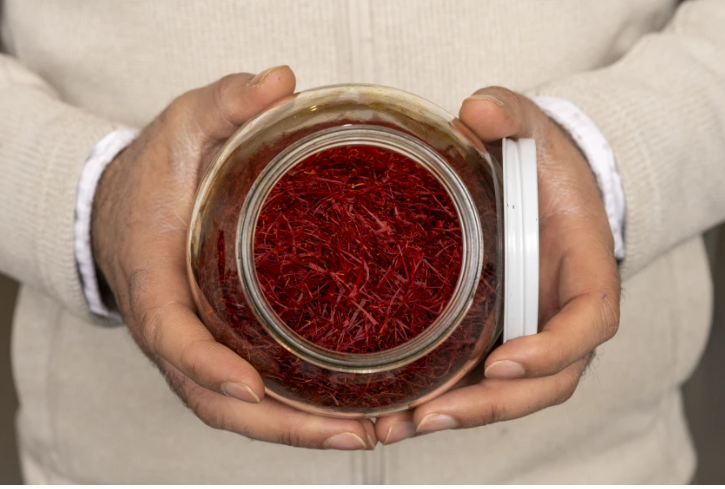
Whole threads make their form easier to inspect than powder. Visual inspection is useful, although it cannot establish authenticity or quality on its own. Our ISO 3632 guide explains how laboratory evidence complements a product description.
How can saffron create opportunities for growers?
Saffron’s high market value makes it an interesting crop for small areas of farmland. Accounts from growers describe meaningful income opportunities, although actual returns depend on yield, labour, access to buyers and the price received.
A high price per gram does not automatically mean a high profit. Harvesting and separating the stigmas require substantial labour, and transport and market access add costs.
Saffron has also been promoted as a legal agricultural income source in Afghanistan. The sector can create work in cultivation, harvest and processing, including for women who play important roles in these activities.
These opportunities are significant, but the effects on a household or community depend on the terms of employment and trade. Broad promises of prosperity should be supported by specific evidence.
Fair trading relationships and sustainable supply chains
Direct relationships between suppliers and growers can support clearer communication, predictable purchasing and longer-term planning. Buyers can ask how prices are agreed, who undertakes the work and how origin is documented.
Such models may reduce some supply-chain risks and improve transparency for customers. They still face price volatility, political uncertainty and logistical obstacles.
Responsible sourcing is therefore a continuing process, rather than a conclusion established by a product’s origin.
Export challenges
Afghan saffron producers and exporters face constraints involving infrastructure, transport and complex trading conditions. Indirect routes may add cost and time.
Changes in transport prices and market conditions can be especially difficult for smaller enterprises. The development of the sector consequently depends on more than crop quality: reliable logistics and practical access to buyers also matter.
These conditions change over time. A general account of the sector should not be interpreted as current legal or shipment advice for a particular export.
Why origin and quality evidence matter
The saffron market is vulnerable to substitution, dilution and misleading descriptions. Clear origin information is valuable when it is supported by traceable records and appropriate testing.
Other plant materials can be used to imitate saffron, particularly in powdered products. Whole threads allow a closer visual examination, but credible suppliers should also explain the evidence behind their quality claims.
Customers should consider the batch, the laboratory report and the actual scope of the assessment alongside the origin story.
A crop connecting tradition and international markets
Saffron from Afghanistan combines agricultural skill, cultural identity and international trading possibilities. It can contribute to income and cooperation when quality and relationships are managed responsibly.
The sector nevertheless remains influenced by political developments, logistics and global market conditions. Its potential deserves attention without overlooking those constraints.
For customers, choosing saffron can therefore involve taste, origin, evidence and the people behind the harvest.