A groundbreaking open-access study published in Agrosystems, Geosciences & Environment (Wiley, 2023) has provided one of the most comprehensive analyses of what truly determines saffron yield. The research team, led by Hadi Pirasteh-Anosheh and colleagues from Iran’s Agricultural Research, Education and Extension Organization (AREEO), examined 13 saffron fields across Iran, the world’s largest producer, to identify which climate and management factors make the biggest difference.
🌦️ 1. Temperature is the master variable
Saffron (Crocus sativus L.) thrives within a delicate climatic window.
- The optimal temperature for the first irrigation is around 16°C,
- and for flowering, between 5–10°C.
Cool autumns stimulate flowering, while warm, sunny spring days enhance next season’s corm development.
Regions with lower fall temperatures and higher altitudes (≥1300 m) achieved the best yields.
🌾 2. Field age has a clear yield cycle
Yield increases steadily until the 6th or 7th year (average ~20.8 kg/ha) before declining, yet remains profitable until about year 10. After that, soil fatigue and corm crowding reduce productivity—highlighting the importance of timely field renewal or corm division.
💧 3. Irrigation frequency beats irrigation volume
Surprisingly, the study found that high-yielding fields did not use more total water.
Instead, they used more frequent irrigation events (6.3 times per season) with smaller water volumes each time.
This approach maintained optimal soil moisture while avoiding water stress or stagnation.
🌍 4. Soil texture, density, and pH matter
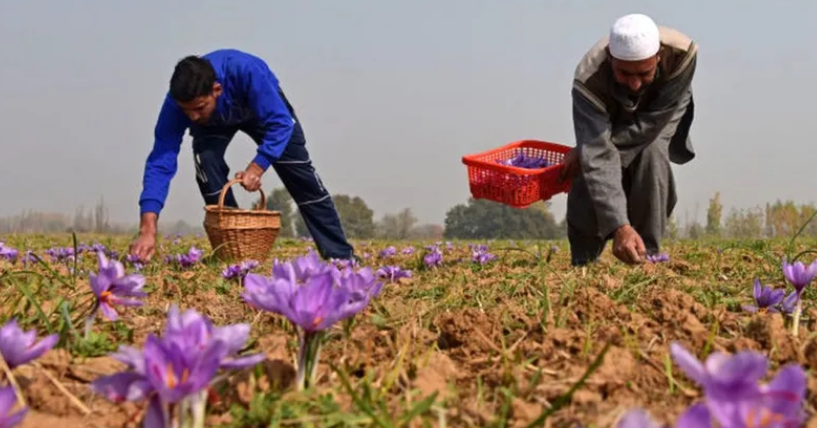
Saffron performed best in coarse or well-balanced soils with good drainage and low bulk density.
Neutral to slightly alkaline soil and water pH supported stronger flowering and corm formation.
No direct link was found between raw manure and yield, but processed organic matter improved soil structure and moisture retention, indirectly raising yields.
🧪 5. Fertilization balance is crucial
Fields that received a complete chemical fertilizer mix — especially those containing sulfur and iron — produced higher yields.
These nutrients improved both the number of flowers and the dry stigma weight (the main economic yield component).
⛰️ 6. Regional performance
The top-performing saffron regions were:
- Birjand — 27 kg/ha
- Sarayan — 24 kg/ha
- Golshan — 23.5 kg/ha
followed by Neyshabur (18) and Kashmar (17.5 kg/ha).
These areas share cooler autumns, balanced soils, and ideal irrigation scheduling.
⚖️ 7. Key takeaway
Saffron yield is shaped far more by microclimate and management than by genetics.
Optimal temperature timing, smart irrigation, balanced fertilization, and maintaining soil health are the pillars of sustainable high-yield saffron cultivation.
“High temperatures are the main limiting factor for expanding saffron into new regions,” the authors conclude. “Proper climate conditions and improved management practices can substantially enhance yield without increasing resource use.”
🔗 Source:
Pirasteh-Anosheh H., Babaie-Zarch M.J., Nasrabadi M.E., et al. (2023).
Climate and management factors influence saffron yield in different environments.
Agrosystems, Geosciences & Environment, 6(3), e20418.
DOI: 10.1002/agg2.20418
🌸Science meets tradition — sustainable saffron begins with knowledge.
💛 Buy premium saffron from Saffrona